
Why Singing is good for you?
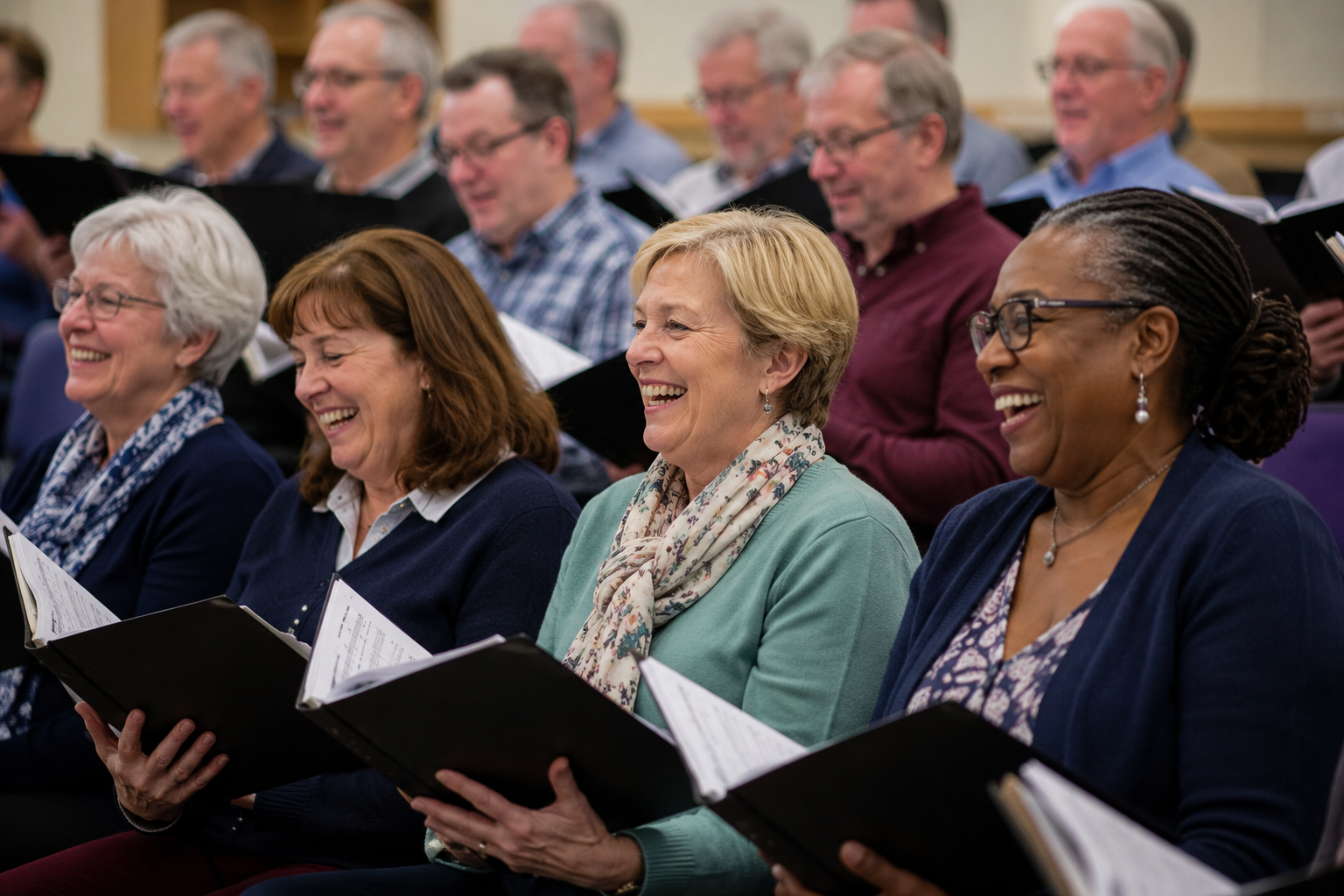
We could tell you singing makes you feel brilliant — and if you've ever sung with us, you already know that. But it turns out there's a growing pile of proper research backing up what choir members have always known. Here's the honest, jargon-light version, with links if you fancy reading the real thing for yourself.
it genuinely lifts your mood
Singing isn't just a nice distraction — it changes what's happening in your body. Studies measuring stress hormones have found that levels of cortisol (your body's main stress hormone) drop after a singing session, often within half an hour. At the same time, singing together has been linked to a rise in oxytocin — sometimes nicknamed the "bonding hormone" — which is part of why a room full of near-strangers can start to feel like old friends after a term or two.
You don't need a lab to tell you this bit works. But it's nice to know the biology backs you up.

It's one of the best cures for loneliness going
A UK study following older adults through the pandemic found that people in singing groups held onto their sense of wellbeing and connection even when so much else fell away — and described their choir as a genuine lifeline, not just a hobby. Other research has linked regular choir singing to reduced loneliness and anxiety, and an improved overall sense of quality of life.
It makes sense when you think about it: singing in harmony with other people is one of the few activities that's both deeply social and completely absorbing at the same time. You can't really sing in a group and feel alone while you're doing it.

Research following choir singers over several years has found associations between regular singing and better-maintained cognitive function in later life — memory, language, and general mental sharpness among them. Nobody's claiming singing is a miracle cure, but "learn new music every week with other people" turns out to be a genuinely good workout for an ageing brain.
it helps keep your mind sharp as you get older
It's genuinely good for your body, not just your mood
Singing is, among other things, a breathing exercise in disguise. Programmes like Singing for Lung Health have been developed specifically to help people with respiratory conditions such as COPD, using the breath control and posture that singing naturally demands. You don't need a diagnosis to benefit — better breath control, better posture, and a bit more puff are useful to anyone.
The bit the research can't quite capture
Here's the thing none of the studies can fully measure: how it actually feels to nail a big chord as a room full of people, to have a rubbish week completely lifted by two hours of rehearsal, or to realise the people either side of you have become real friends. That's the part you'll only really understand by coming along.
Great music. Made by you — and, as it turns out, genuinely good for you too.
Want to read the research for yourself?
- The neurochemistry and social flow of singing: bonding and oxytocin — Frontiers in Human Neuroscience
- Choir versus solo singing: effects on mood, oxytocin and cortisol — Frontiers in Human Neuroscience
- Health and wellbeing benefits of group singing for older people — Journal of Gerontological Social Work
- Longitudinal effects of choir singing on ageing cognition and wellbeing — Frontiers in Human Neuroscience
- SingStrong: singing for better lung health in COPD — Disability and Rehabilitation
- Singing & health: the evidence — Sing Up Foundation
This page is for general interest and isn't medical advice — if you have a health condition, it's always worth a chat with your GP about what's right for you.